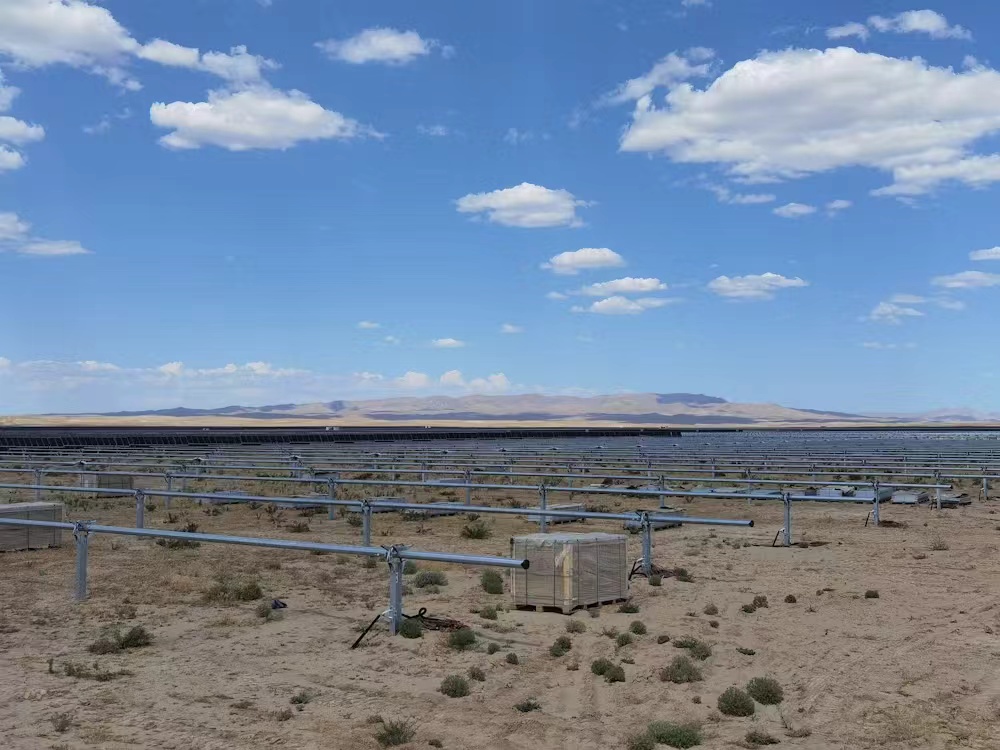
This solar system project in Bahia, Brazil integrates advanced engineering services, project management, and sustainable solutions to deliver clean energy, local development, and environmental benefits.
Case Details
TECHNICAL CONFIGURATION
Trina Solar Vertex Bifacial Modules + Spanish Soltec Single-Axis Trackers, supported by professional engineering services and project management services to ensure stable operation and optimized efficiency for this solar system project.
LOCALIZATION STRATEGY
Hire 125 local workers and co-establish an operation and maintenance training center with Bahia Federal University. With integrated project solutions and quality engineering services, this initiative strengthens local talent development and promotes long-term project solutions in the region.
Project Details and Achievements
- Energy Performance: The first-year power generation reached 98 million degrees, after being connected to the local power grid, it alleviated the power shortage during the dry season in Bahia State (the hydropower output decreased by 30% due to drought), reducing the peak-valley difference in the power grid by 15%. Supported by power engineering solutions and construction project management services, the solar engineering company ensured reliable delivery of energy benefits.
- Long-term Cooperation: The training center has trained more than 200 certified technical personnel, of whom 80 have joined the power station operation and maintenance team or local photovoltaic enterprises; collaborated with the university to conduct research on "Module Degradation Characteristics under Tropical High Irradiance," providing data support for photovoltaic projects in South America. Through engineering consulting services, custom engineering solutions, and professional engineering services, the project not only improved technical standards but also created lasting value in real estate development and regional growth.
- Environmental Benefits: The project covers an area of 120 hectares, using a low-impact construction model (retaining 60% of the original vegetation), reducing carbon emissions by approximately 52,000 tons per year, equivalent to planting 280,000 trees. This solar system project reflects integrated engineering and architectural engineering practices, combining outsourced engineering services with sustainable development goals, reinforcing the role of an engineering services company in delivering integrated project solutions and long-term environmental protection.